
Interview with NLG Artist Billy Munden
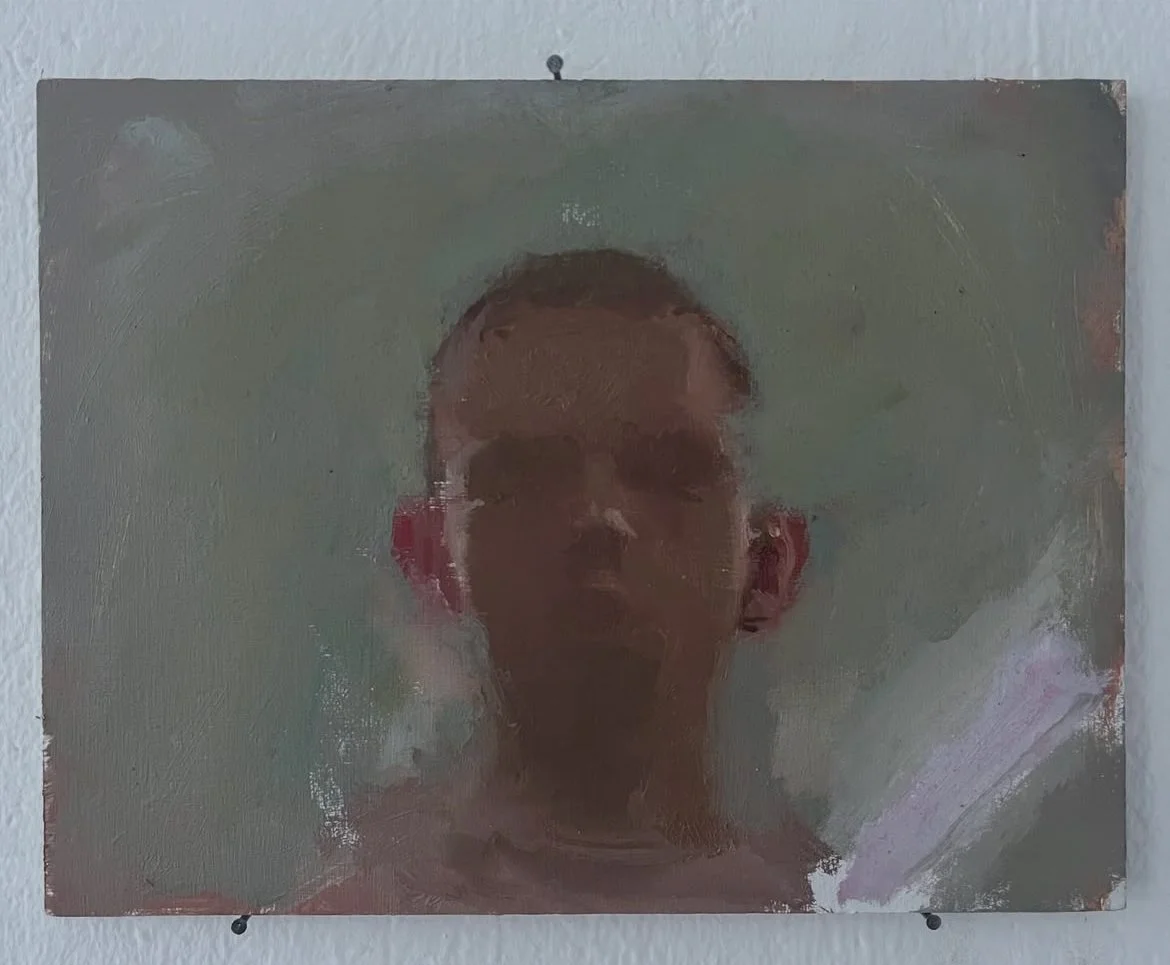
Self Portrait 2025
Joshua Press: Could you give us a little introduction? Your name, where you come from, where you live, where you base your painting practice, and if you have a career outside of painting, what do you do?
Billy Munden: My name is Billy Munden. I was born in Cornwall and lived in Falmouth until I was 19. I’m now based in London. This summer I’m graduating from City and Guilds of London Art School with a BA in Fine Art. Aside from making paintings, I work at a bar, but we’ll have to see what happens post-graduation.
Joshua Press: What’s your background in painting? Where did you begin, and what are your earliest memories of art?
Billy Munden: My family has always been pretty engaged with the arts. My mum studied printmaking and can do very good drawings when she wants to. Both my parents work as theatre designers; my dad mostly builds and designs sets, and my mum mainly makes costumes, props and puppets.
I think Hockney was the first painter I was aware of, probably from a book in the house. My mum was actually the first person to make me do a transcription—a copy of a Hockney landscape—when I was about nine. I became interested in being a painter and taking it more seriously when I was around sixteen. I completed an Art Diploma at Truro College, where I had some really great teachers, including Mark Dunford and Kay Vinson.
Joshua Press: When did you first study with the North London Group?
Billy Munden: At the Hampstead Art Society Summer Show in 2022, I was awarded the Studio Prize, which ended up giving me free access to workshops they were organising. I attended a couple with Joshua before the official North London Group was formed and have been taking part on and off ever since. It has been incredibly important to my practice and development.
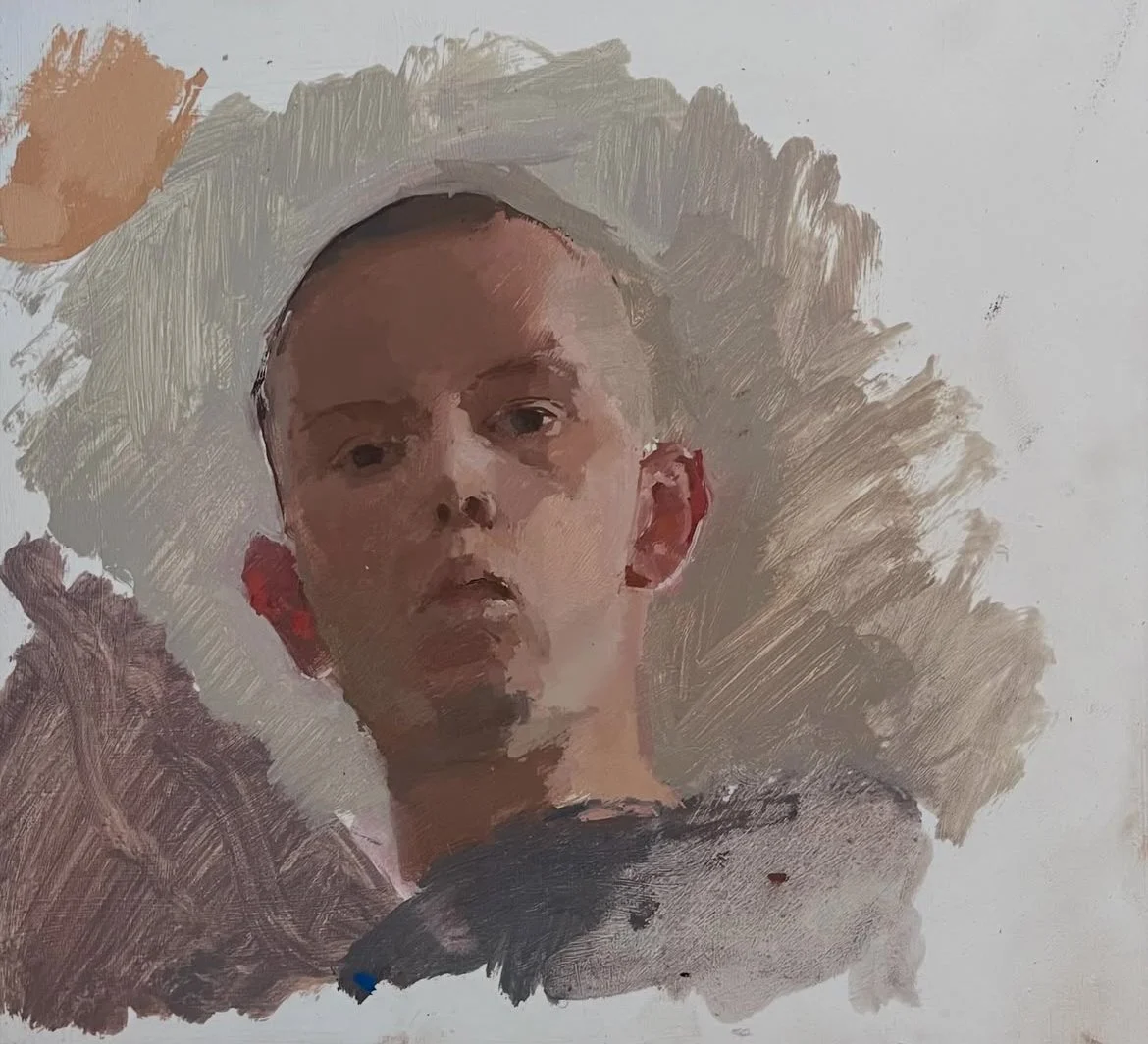
Self Portrait 2024
Joshua Press: How were the sessions different from, or similar to, your previous art training?
Billy Munden: Working with the NLG has always been concurrent with studying BA Fine Art at university, and they fulfil very different criteria. Traditional undergraduate education (I did a year at Camberwell and then two at City & Guilds) seems to be more about allowing space and time to make work, which has also been vital—though the allocated space at Camberwell was tiny.
That being said, I probably learned more about actual painting and looking—understanding colour, form, drawing, and so on—in a couple of sessions with the NLG than I did during my entire time at art school. NLG sessions are infinitely more focused, and Joshua’s thoughtful criticism has been so welcome after the complete subjectivity of art school, which is very easy to get lost in.
Joshua Press: How has your experience with the NLG changed your perspective on your practice and on art in general? How has transcription influenced your practice and the way you observe from nature?
Billy Munden: The importance that Joshua places on looking at art and being engaged with art history has had a really positive influence on me and my practice. Turning to paintings and painters when you get stuck with your own work, and knowing how to use them as more than just inspiration—as answers to your questions—is a lesson that is constantly useful.
Working with transcription—simplifying and reverse-engineering what you’re looking at—is amazing for gaining an understanding of what makes great paintings work. It is equally humbling and satisfying.
Joshua Press: What are your aspirations as a painter? In terms of your studies, what are your particular goals or focus?
Billy Munden: I don’t entirely know, to be honest. As long as I can keep painting as often as possible, and for as long as possible, I’m very happy to follow my nose, as I always have done. I love looking at paintings, so I just want to make paintings that I would want to see.
Joshua Press: How has the NLG shifted the way you look at art and visit museums?
Billy Munden: One of the greatest gifts from working with Josh and the NLG is gaining a deeper appreciation for art from all periods. When I started painting, my interests were very much focused on post-20th-century painters, but the NLG promotes looking at historic art plainly, which lifts the veil on works by the great masters and allows you to use their learning and experience in your own practice.
I think painters and paintings feel more relatable—and more beautiful—since I have been really looking at them and transcribing them.
Joshua Press: Which painters in particular currently excite you and inform your practice? Could you narrow it down to three artists?
Billy Munden: Very tricky. Narrowing it down is tough, as I always look at different artists for different reasons. I really love Nicholson at the moment, especially his still lifes and landscapes. The retrospective he had at the Pallant House Gallery recently was incredible.
I’m a big fan of Tiepolo—his ink drawings are so, so good. I also really love Corot and Degas. There are a host of painters working now whose work I greatly admire. I really don’t have a favourite!
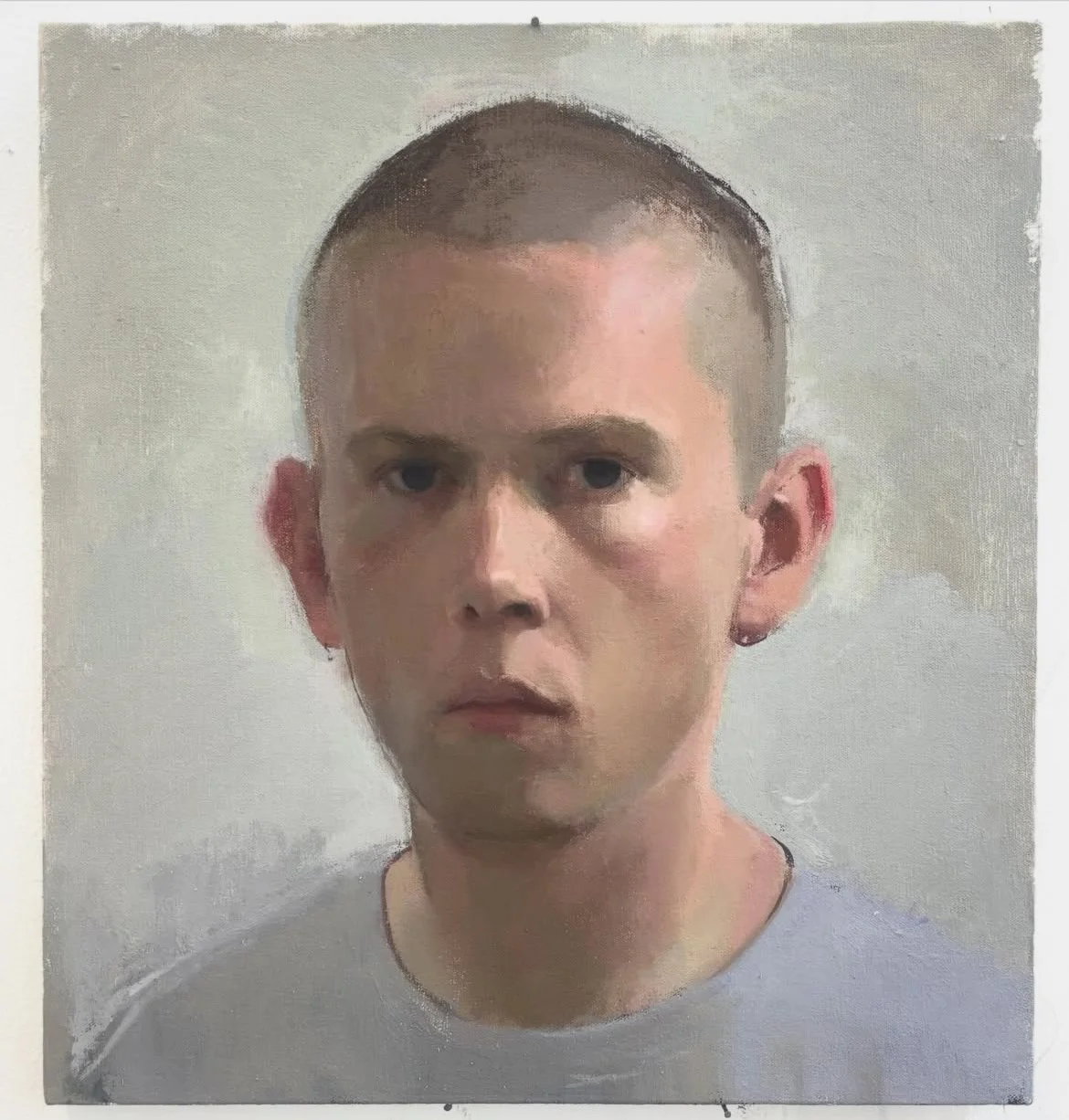
Self Portrait 2026